

Eliminating An Infant’s Lip Or Tongue Tie Can Make Breastfeeding Easier
Most babies come into the world ready and able to nourish at their mother’s breast through breastfeeding. No training is required! About one in ten children may have a structural abnormality with their tongue or lip that makes it difficult for them to breastfeed. Frenum or Frenulum The abnormality involves a small strip of tissue called a frenum or frenulum. It is found in the mouth connecting soft tissue to more rigid structures. You’ll find a frenum attaching the upper lip to the gums. While another connects the tongue’s underside to the mouth’s floor. Frenums are a normal part of oral anatomy and usually don’t pose a problem. But if the frenum
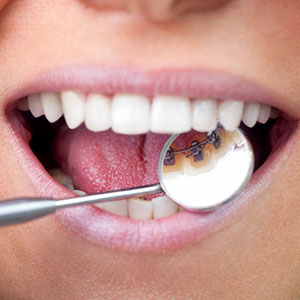
Lingual Braces Offer A Less Visible Alternative To Traditional Braces
We’re all familiar with tried and true traditional braces and perhaps with newer clear aligners for realigning teeth. But there’s an even more, novel way quickly becoming popular: lingual braces. This type of brace performs the same function as the traditional but in an opposite way. Rather than bonded to the front of the teeth like labial (“lip-side”) braces, these are bonded to the back of the teeth on the tongue (or “lingual”) side. While labial braces move teeth by applying pressure through “pushing,” lingual braces “pull” the teeth to where they need to be. Although lingual braces are no better or worse than other orthodontic methods, they do have

Dr. Travis Stork: If Only I’d Worn A Mouthguard!
If we could go back in time, we all probably have a few things we wish we could change. Recently, Dr. Travis Stork, emergency room physician and host of the syndicated TV show The Doctors, shared one of his do-over dreams with Dear Doctor magazine: “If I [could have] gone back and told myself as a teenager what to do, I would have worn a mouthguard, not only to protect my teeth but also to help potentially reduce risk of concussion.” What prompted this wish? The fact that as a teenage basketball player, Stork received an elbow to the mouth that caused his two front teeth to be knocked out of place. The teeth
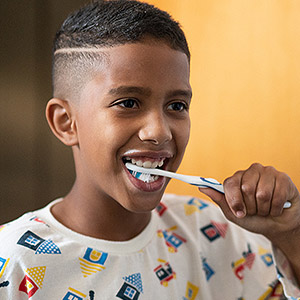
Want To Improve Your Athletic Performance? Try Tuning Up Your Dental Care
After a long hiatus, school athletes are gearing up for another sports year. Given the pandemic, they may be modifying some of their usual habits and practices. But one thing probably won’t change: These young athletes will be looking for every way possible to improve their sports performance. And a new research study offers one possible and surprising, avenue—beefing up their oral hygiene practice. That’s the conclusion of the study published in BMJ Open Sport & Exercise Medicine, a sister publication of the British Journal of Sports Medicine. Working with a group of about 60 elite athletes, a research group in the U.K. found that improving oral health through better hygiene practices

Understanding The Benefits – And Limitations – Of Dental Insurance
Most of us think of insurance as a means to protect us and our families from unforeseen loss. While that’s the general definition, some insurance plans — like dental — don’t quite work that way. The typical dental plan actually works more like a discount coupon for dental services. Most are part of an employer-based benefit package and usually “fee-for-service”: the insurance company pays for part or sometimes the entire bill after your dental visit based on a fee schedule laid out in the policy. A plan’s benefits depend on what the insurer offers to cover and what level of coverage your employer (or you) are willing to pay for.
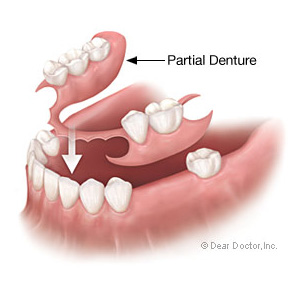
Partial Dentures: An Affordable Alternative To More Expensive Restorations
Dental implants are today’s preferred choice for replacing missing teeth. They’re the closest restoration to natural teeth—but at a price, especially for multiple teeth. If implants are beyond your current financial ability, an older, more affordable option is a removable partial denture (RPD). Similar in concept to a full denture, a RPD replaces one or more missing teeth on a jaw. It usually consists of a lightweight but sturdy metal frame supporting a resin or plastic base (colored pink to mimic gum tissue). Prosthetic (false) teeth are attached to the base at the locations of the missing teeth. Unlike transitional dentures, RPDs are designed to last for many years. Although